

All Men Are Heels: Seigen Ono and Comme des Garçons
How Seigen Ono’s avant-garde soundtrack for Homme Plus' Spring-Summer 1988 collection became an international, genre-defying soundscape
“I want to use music that makes the clothes look beautiful, and that no one has ever heard before.” — Rei Kawakubo
Origins of Ono
Often sparing with words and details, there is rarely such a thing as a simple request from Comme des Garçons’ stoic founder Rei Kawakubo; yet her mandate for a creative vision and soundtrack for her upcoming Spring-Summer 1988 mens’ collection was shockingly bare—simply, to make the clothes look beautiful. Many might founder under such a vague and seemingly reductive missive, yet Seigen Ono, a highly touted recording engineer, musician, and record label founder, did not.
Ono was born in 1958 in Fukushima Prefecture. He began his career engineering and recording sound domestically, with his first credited role as a recording engineer and mix assistant for Yumi Matsutoya’s Surf & Snow - Volume One (1980).1 Ono went on to engineer and master dozens of records, primarily Jazz and Jazz Fusion, as well as Pop, City Pop, Art Rock and New Wave. His first major breakthrough came in 1983, when he worked with Yellow Magic Orchestra’s Ryuichi Sakamoto to record and mix the ethereal soundtrack for Merry Christmas Mr. Lawrence, starring David Bowie and directed by the visionary, internationally-minded filmmaker Nagisa Ōshima. By 1987, Ono had collaborated with American Jazz composer John Zorn—most notably on Spillane, a cinematically fragmented pastiche of anti-flow jazz composition—as well as Yasuaki Shimizu’s Music for Commercials, a modern classical, electro-Japonic maze of conceptual world-building for never-having-existed corporate dreamscapes.
Beyond his recording, engineering, and collaborative work, Ono also began producing music under his own name around the same time. His debut album, Seigén, was released in 1984 on JVC, offering Jazz and Ambient neo-classical melodies sharpened into cold, stroboscopic moodscapes. He followed this in 1988 with The Green Chinese Table, which placed a stronger emphasis on classical composition. In the period between these releases, Ono also launched his own record label, Saidera, in 1987. This massively productive seven-year span, from 1980 through the end of 1987, is what ultimately caught Rei Kawakubo’s attention.
City Streets and a Blind Quartet
Ono’s initial commission was for the upcoming Spring-Summer 1988 collection for Homme Plus, Comme’s premier menswear line. In preparation, Ono enlisted several key collaborators beginning in the summer of 1987, most notably Arto Lindsay, a pioneer of New York’s No Wave scene and member of the group DNA,2 as well as saxophonist and composer John Zorn, who had previously worked with Ono on his own album Spillane.
Ono, recalling Kawakubo’s ongoing but cryptic guidance on her envisioned soundtrack, recounts being told to use “sound” but not “music.”3 Although describing this direction as “like a Zen riddle”, Ono had already been experimenting extensively with sound and noise in his prior work, particularly through the use of background noise and field recordings, which he manipulated, reversed, and abstracted. His 1984 recordings specifically incorporated the sounds of New York City streets and parks, a fitting precursor to Ono’s return to the city in 1987 to record material for Comme des Garçons.
Ono divided his 1987 recording sessions between New York City in August, Paris in September, and Tokyo in December. Instrumentation was eclectic and wide-ranging, spanning guitar and saxophone alongside harp, charango, and bolang—one of several African percussive instruments employed, and featuring prominently on Hunting for Lions, the fifth track of Volume 1. The result was tonality without ensemble: a circuitous pastiche that was part No Wave, part Japanese ambient, and wholly original, deft, disorienting, and surprising.
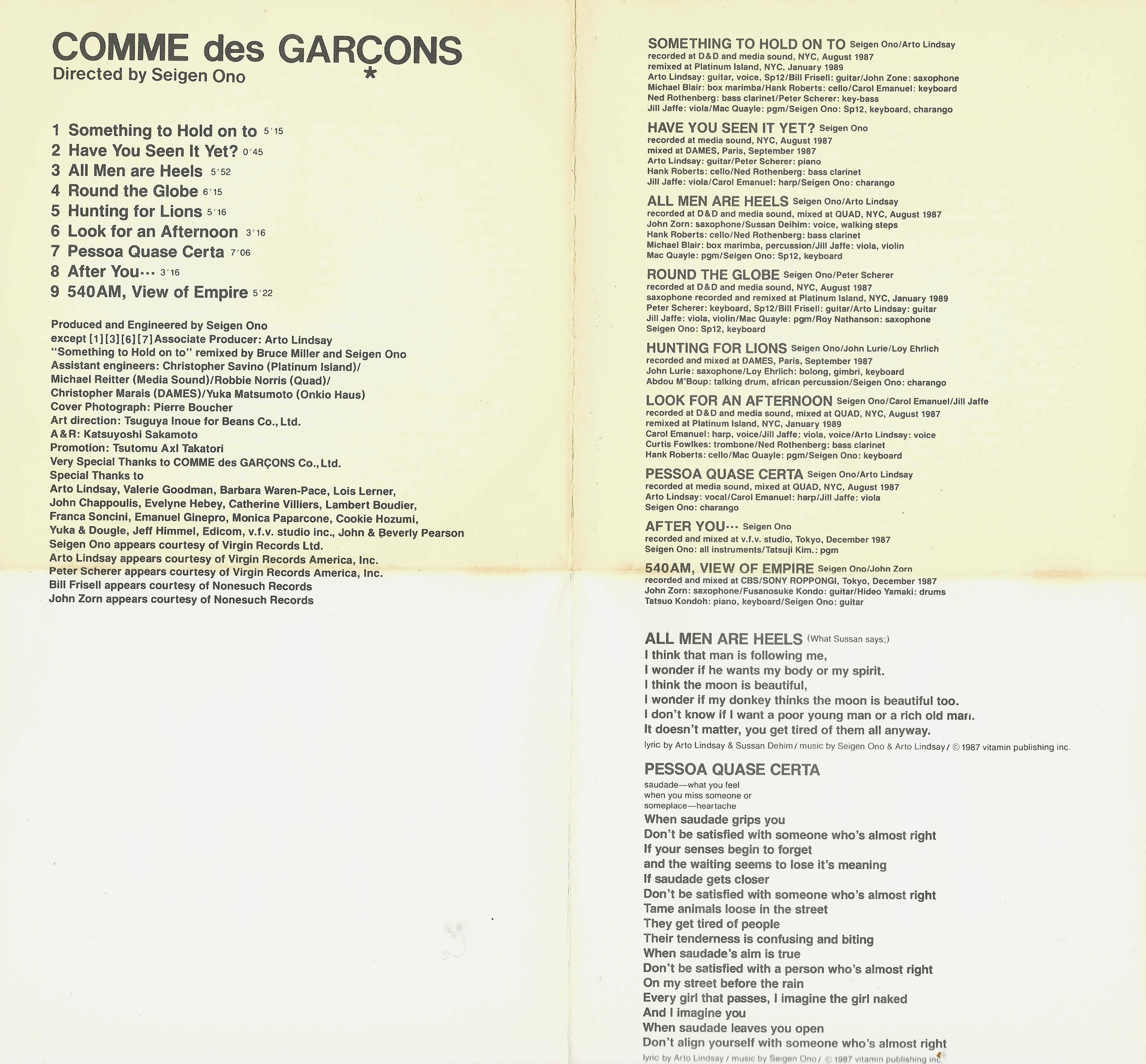
CD liner notes for Vol. 1The Men
Held on 4 September 1987 at the Musée National d’Histoire Naturelle in Paris, the Spring-Summer 1988 collection began abruptly with Ono’s grand intro track, Something to Hold on To. Pounding, industrial drums, reminiscent of German composer Klaus Schulze or British industrial duo Coil, punctuated the dead-quiet air of the venue hall, accented by John Zorn’s screeching, unmistakable blasts of saxophone horn. An armada of white and powder-blue oversized suits soon barreled down the runway, adorned with prominently oversized ribbon fasteners at the lapels—a delicate, feminized detail set against otherwise imposing, wide-shouldered silhouettes. Black pinstriped and checked suiting followed, all delivered at a fast, forceful gait, augmented by the soundtrack’s successive, abrupt shifts into melodic harmony, stripped of percussion. Near the fifteen-minute mark, Kawakubo’s collection transitioned to belted oversized shirts; silhouettes reminiscent of neoclassical tunics and a fitting bookmark within Homme Plus’ worldly, atemporal vocabulary. After a tense pause, the final wave of models emerged, ushered in by Ono’s “All Men Are Heels.”
Weaving between Bossa Nova, No Wave, Jazz Fusion, and Classical, Ono’s score gave the collection a fantastical, surreal bent, somewhere between 80s British Industrial and the wafting, off-key melodies of downtown NYC’s late-night jazz clubs. Furthermore, similar to the international architecture and design movements of mid 20th century, Ono’s score feels like a global, worldly, pastiche of composition, pulling from sources as disparate as African folk (as heard in Hunting for Lions), Japonic ambient minimalism on After You…, and classical, Greco-Roman inspirations like the harps employed in Pessoa Quase Certa.
NYC to Rio
While Volume 1 of the Comme des Garçons CD documented the soundtrack to the Spring–Summer 1988 collection, Volume 2 saw Ono once again collaborate with Arto Lindsay and the downtown New York milieu, further extending the project’s international scope. In early 1988, Ono returned to New York City to record with Alfredo Perdernera (a bandoneon player associated with various tango recordings) alongside Jill Jaffe and Evan Lurie, many of whom would later become part of the Seigen Ono Ensemble.4 The following month, Ono traveled to Rio de Janeiro, again partnering with Lindsay and local Brazilian musicians, incorporating regional folk instruments such as the mentirinha.

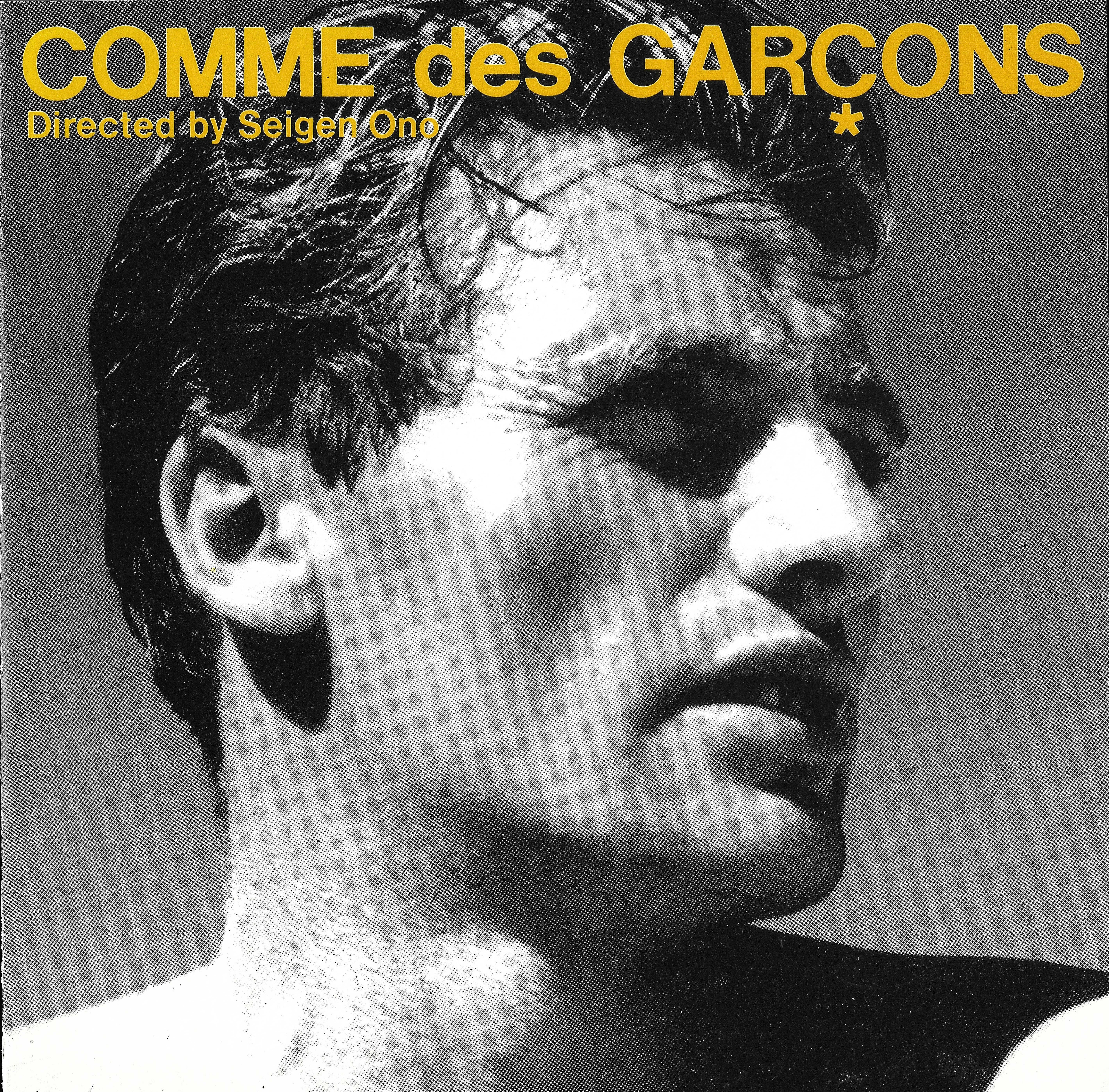
CD Vols. 1 & 2Both volumes were formally released in 1989. The Japanese edition was published by Tokuma, while the international and UK versions were published under Venture, a subsidiary of Virgin Records. Both offerings were published on CD and vinyl, and each were adorned by the timeless, pseudo-erotic portraits of French photographer Pierre Boucher (also featured in Six, Vol. 3). The entirety of the packaging, typography and design was art directed by Tsuguya Inoue, the longtime creative visionary primarily responsible for Comme des Garçons’ inimitable, longstanding aesthetic.
Taken as a whole, the convergence of Kawakubo, Ono, and the downtown No Wave musicians represents a compelling synthesis of Comme des Garçons’ well-established anti-fashion philosophy. This surreal, atemporal fusion of avant-garde aesthetics refused confinement by geography or artificial borders, instead spanning the creative histories of Japan, Brazil, France, and the United States—merging some of the most radical cultural outputs each had to offer.
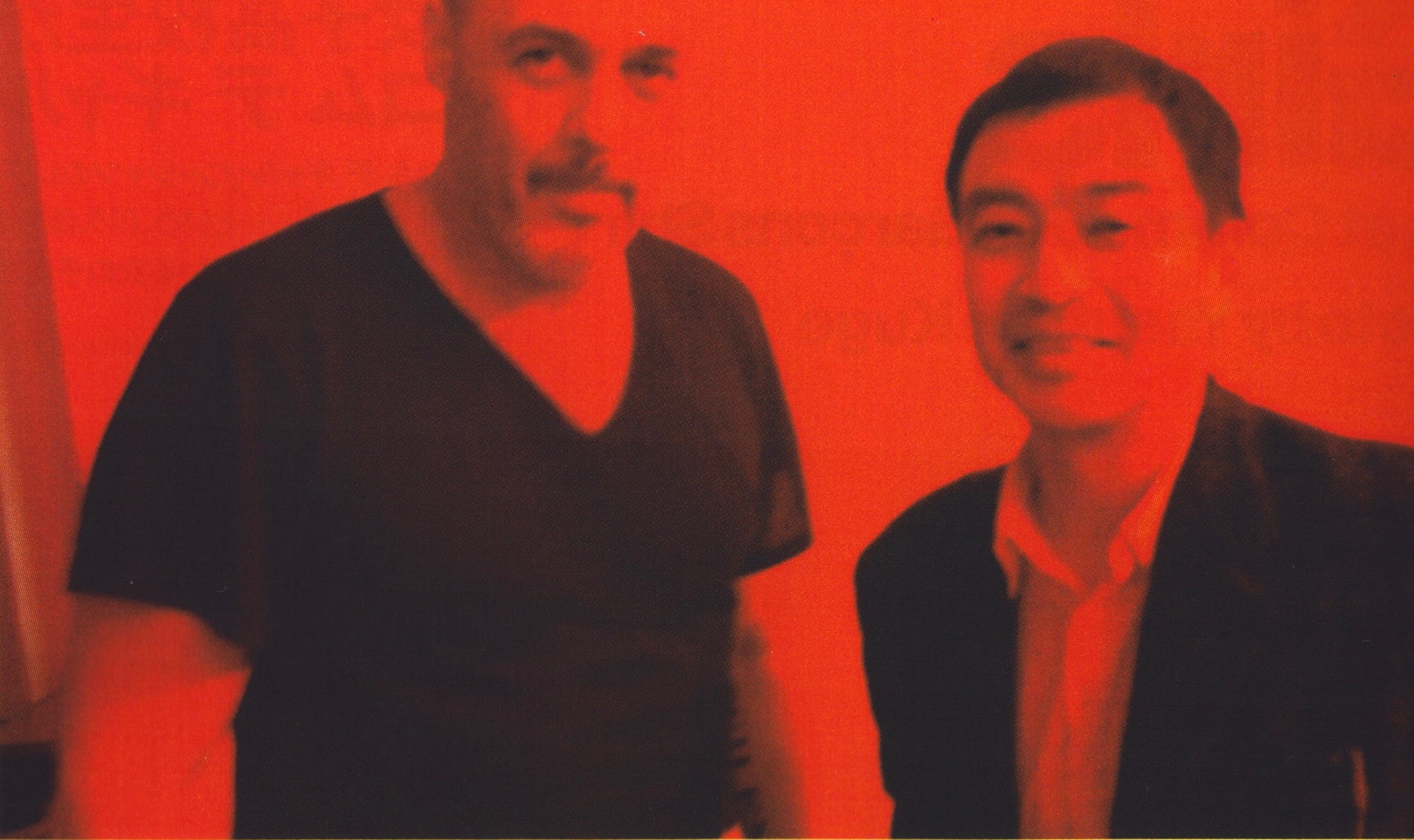
Director Thierry Dreyfus & Seigen Ono, scanned from High Fashion April 2010
I’ve loved these two albums and Seigen’s other LPs for many years, and it’s great to find out more about the background to their recording.